Abstract
- Utilizing Extremely Excessive Velocity HDMI cables ensures compatibility with excessive refresh charges like 144Hz.
- Monitor firmware updates and navigating to particular show settings can unlock greater refresh charges like 144Hz.
- Understanding HDMI 2.1 bandwidth complexities is important for optimum efficiency with fashionable graphics playing cards.
I lately received my fingers on a ridiculously highly effective Asus ROG G700 (2025) gaming rig geared up with Intel’s Core Extremely 7 Processor 265F and Nvidia’s GeForce RTX 5090. I am properly conscious that that is overkill for Halo Infinite and Age of Empires IV — the 2 video games I play most continuously — however when an organization reaches out and presents you the prospect to check out a PC this highly effective, it is tough to say no.
My basement workplace setup is considerably sophisticated. I’ve a Change OLED mannequin, a PlayStation 5 Slim, a Xbox Collection X, and a M3 Professional Max MacBook Professional, all hooked as much as a 27-inch LG UltraGear 27GP950-B, a comparatively well-reviewed, however now discontinued monitor that dropped again in 2021. On the time, it was one of many few screens on the market that featured full bandwidth HDMI 2.1, opening the 4K 120Hz floodgates for the few supported video games on the PS5 and Xbox Collection X (truthfully, it was principally only for Halo Infinite on the Xbox Collection X). Assist for NVIDIA and FreeSync Premium Professional is an added bonus, too.
“Although this setup is considerably sophisticated, it is labored fairly flawlessly — not less than till now.”
To set the stage concerning my difficulty, it is vital to say that this monitor has a really customary variety of ports. There’s DisplayPort 1.4 — which I exploit with my MacBook and a USB-C-to-DisplayPort 1.4 cable to get 120Hz output to the monitor — and two HDMI 2.1 ports. For years, I’ve used one HDMI 2.1 port for my Xbox Collection X and the opposite for an HDMI 2.1-capable switcher that my Change OLED Mannequin and PS5 Slim are plugged into. I’ve no clue what model this HDMI switcher is, however again once I purchased it in 2020, it was one of many first obtainable on Amazon (it appears to have been discontinued since I am unable to discover it anymore).
Although this setup is considerably sophisticated, it is labored fairly flawlessly — not less than till now.
Silkland 10K 8K HDMI 2.1 Cable
This HDMI 2.1 Extremely Excessive Velocity cable from Silkland is 4K/240Hz, 144Hz 120Hz, and 8K@60Hz succesful.
- Size(s)
-
1-50ft
- Supplies/Development
-
Braided
- Capability
-
4K/240Hz 144Hz 120Hz, 8K/60Hz
- Model
-
Silkland

Associated
This $40 HDMI accessory saved my sanity
Who knew this tiny, comparatively low-cost machine may resolve all of my TV connection woes?
Should you’re in search of a dependable HDMI 2.1 cable that is additionally inexpensive, Silkland’s 10K 8K HDMI 2.1 Cable is a superb possibility (I personal roughly 8 at this level).
HDMI continues to be a complicated mess
Greater bandwidth cables make issues much more sophisticated
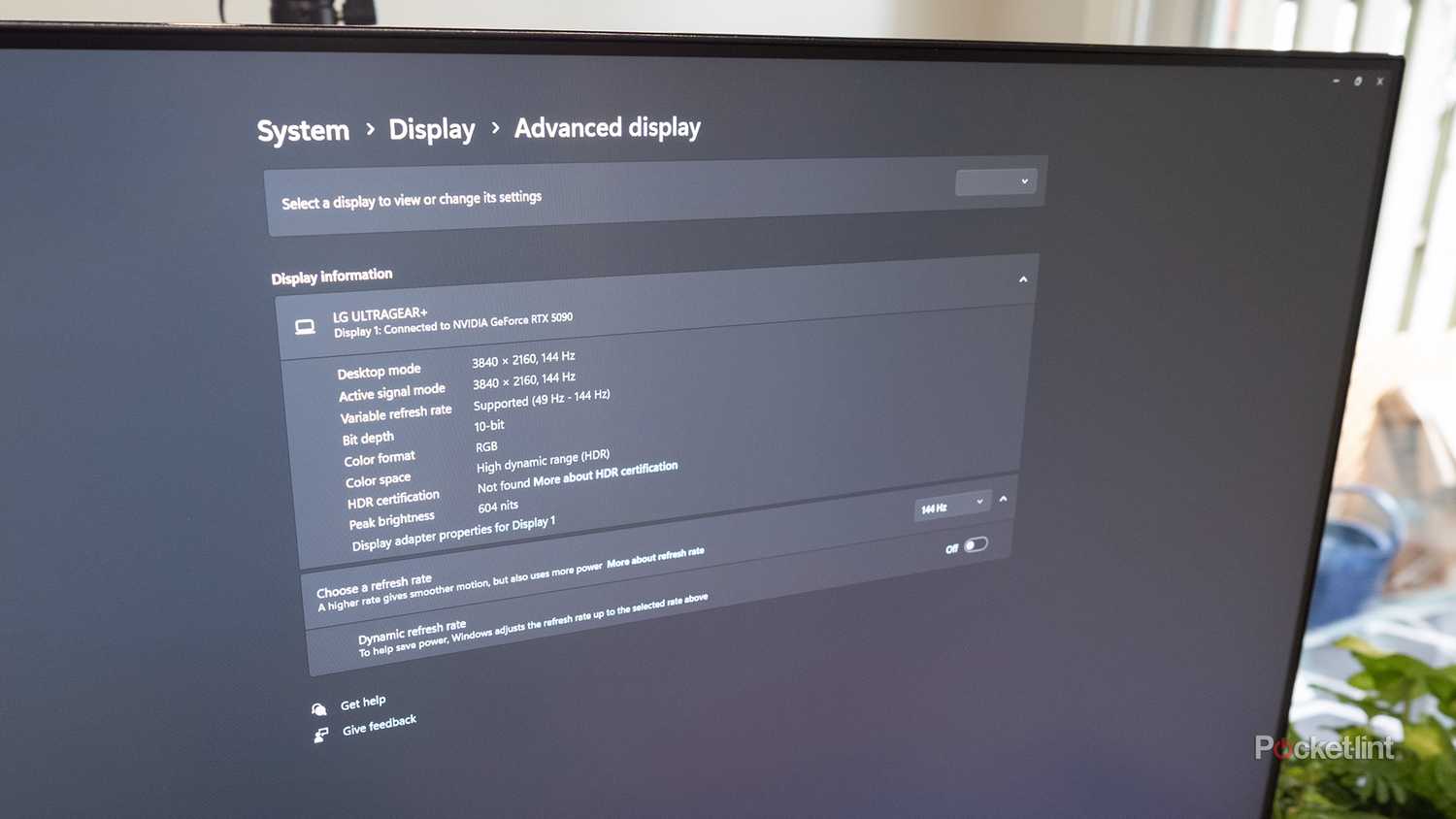
I shortly decided that plugging the Asus ROG G700 (2025) into my HDMI 2.1 switcher can be the best resolution to my drawback. Nonetheless, no matter what I attempted, I could not work out a technique to get my 144Hz-capable (160Hz in case you overclock it and use show stream compression) monitor to push previous 120Hz over HDMI 2.1, regardless of the port format supporting the 48Gbps bandwidth switch. I might navigate to Superior underneath Show Settings and 120Hz remained the one possibility.
“The ROG Astral RTX 5090 is without doubt one of the first graphics playing cards to characteristic two HDMI 2.1 ports.”
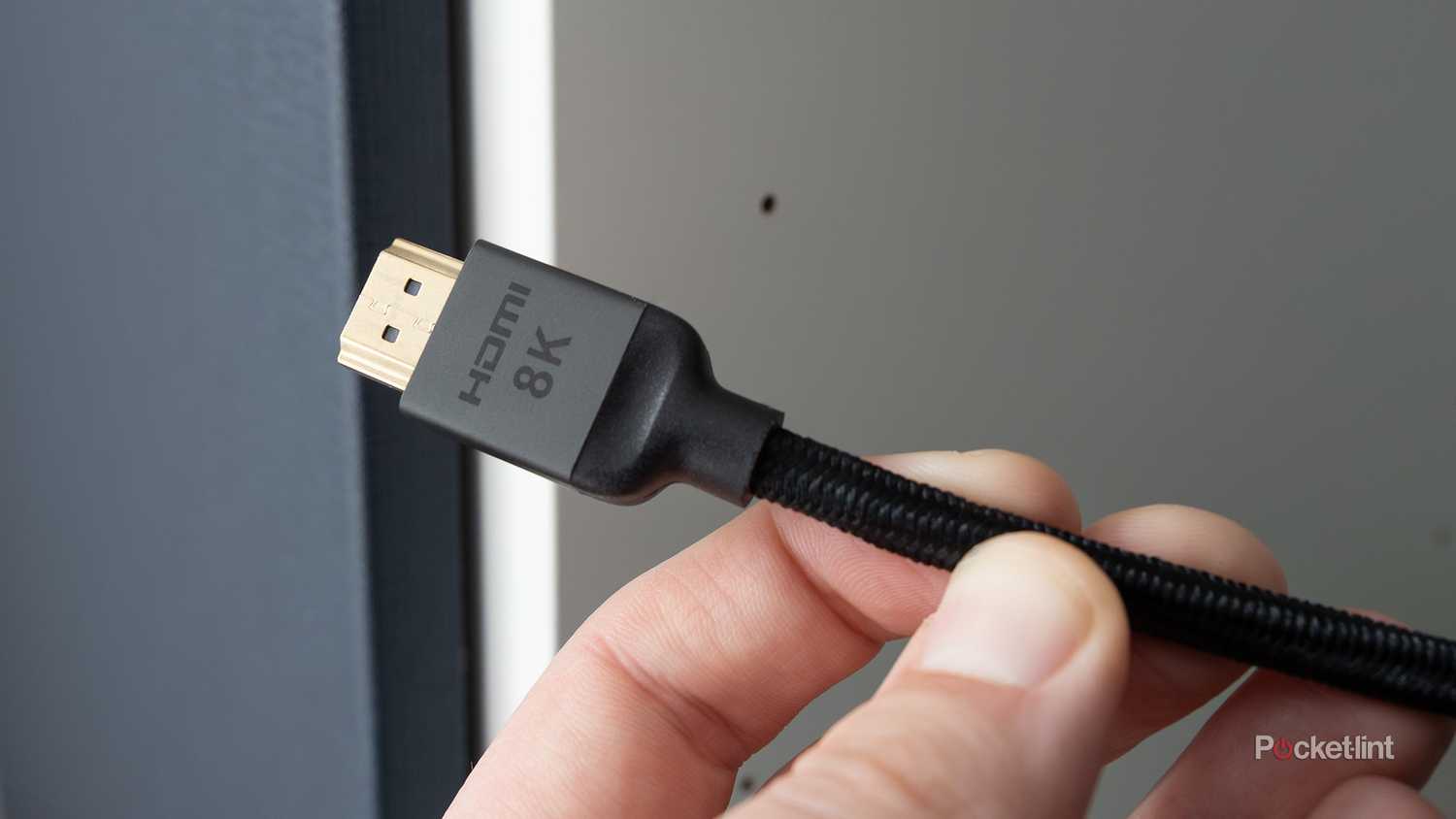
This is the place I attempted just a few issues. I hooked the Asus ROG G700 (2025) up via Show Port 1.4 to see if the 144Hz possibility appeared in Home windows 11’s Superior Show Settings. Fortunately, it did. I then tried a special HDMI cable after noticing the one I used to be utilizing did not say “Extremely Excessive Velocity” on it and as a substitute was labelled “Excessive Velocity.” HDMI 2.0 10.2Gbps Excessive Velocity cables can hit 4K/30Hz (there’s additionally HDMI 2.0a and HDMI 2.0b that assist 18Gbps — these are generally known as Premium Excessive Velocity HDMI cables), whereas 48Gbps Extremely Excessive Velocity cables can attain a most of 8K/60Hz and 4K/120Hz/144Hz. I additionally ensured the HDMI cable operating out of the switcher was Extremely Excessive Velocity suitable. Confused but? I don’t blame you.

Sadly, this nonetheless did not resolve the difficulty. At this level, my subsequent guess was that the HDMI switcher was by some means the supply of my woes, so I grabbed the HDMI 2.1 switcher I’ve been using in my living room. Whereas this one labored, 144Hz nonetheless did not present up as an possibility. My guess is that the majority switchers can solely deal with 120Hz and never 144Hz, regardless of technically being able to supporting the bandwidth. This is smart given HDMI 2.1 144Hz is comparatively new within the PC house, and the ROG Astral RTX 5090 is without doubt one of the first graphics playing cards to characteristic two HDMI 2.1 ports.
The following step was to skip the switcher and plug the ROG G700 (2025) immediately into my monitor’s HDMI 2.1 port. Sadly, the 144Hz possibility nonetheless did not seem in Home windows 11. Does HDMI 2.1 simply not assist 144Hz? Are all of the Reddit threads I learn over the previous a number of hours simply completely unsuitable?
Earlier than you scroll all the way down to the feedback to inform me that DisplayPort 1.4 is best than HDMI 2.1 and that I should not be making an attempt to do that in any respect, the previous port possibility with a USB-C-to-DisplayPort-1.4 cable is the one simple technique to get my MacBook Professional to hook up with an exterior monitor at 120Hz. You may get it to work over HDMI 2.1, nevertheless it’s a very complicated process.

Associated
I can’t believe no one is talking about this massive HDMI problem
With so many units, TVs are struggling to maintain up with the HDMI drawback.
Be sure your monitor is up to date and at all times use Extremely Excessive Velocity cables
Welcome to the wild work of HDMI 2.1

It seems that I wanted to replace my monitor by way of a USB-B cable via LG’s OnScreen app so as to add 144Hz HDMI 2.1 compatibility. Subsequent, I navigated to the UltraGear 27GP950-B’s Settings and chosen Normal. Then I scrolled previous the primary row of choices to get to HDMI Extremely HD Deep Coloration and chosen the 144Hz possibility. Like magic, the flexibility to set the monitor to 144Hz appeared in Home windows 11’s Superior Show Settings. Why is that this setting listed as being associated to paint and never refresh price? I’ve no clue. My
55-inch Hisense U8H
has an analogous setting for its one HDMI 2.1/120Hz port.
So what have I realized from this expertise? First, I am at all times going to ensure my monitor is updated with the newest firmware. On prime of that, once I’m coping with high-bandwidth resolutions and refresh charges like 144Hz/4K, I now know it is vital to double-check what kind of HDMI cable I am utilizing and to solely persist with Extremely Excessive Velocity cables. You possibly can normally determine these cables by the Extremely Excessive Velocity label on them alongside the 8K (they’re usually braided, too).
Hopefully, this convoluted journey via the world of HDMI and excessive refresh charges helped you out indirectly. Within the coming weeks, I will have extra on Pocket-lint about my return to PC gaming and the Asus ROG G700 (2025).

Associated
Is the Galaxy S25 Edge really worth $1,100? I went hands-on and here are my thoughts
The primary skinny telephone has arrived, however does it dwell as much as the hype?
Trending Merchandise

HP 15.6″ Transportable Laptop comp...
ASUS RT-AX88U PRO AX6000 Twin Band WiFi ...


HP 17.3″ FHD Business Laptop 2024,...

Thermaltake V250 Motherboard Sync ARGB A...
TP-Hyperlink AC1200 Gigabit WiFi Router ...
Lenovo IdeaPad 1 Student Laptop, Intel D...